Vinyl vs tiles for a bathroom floor comes down to this: vinyl is warmer underfoot, quicker to lay and kinder on the budget, while tiles last longer, look more premium and suit underfloor heating and walk-in showers. Both work well in an Auckland bathroom when the floor underneath is right.
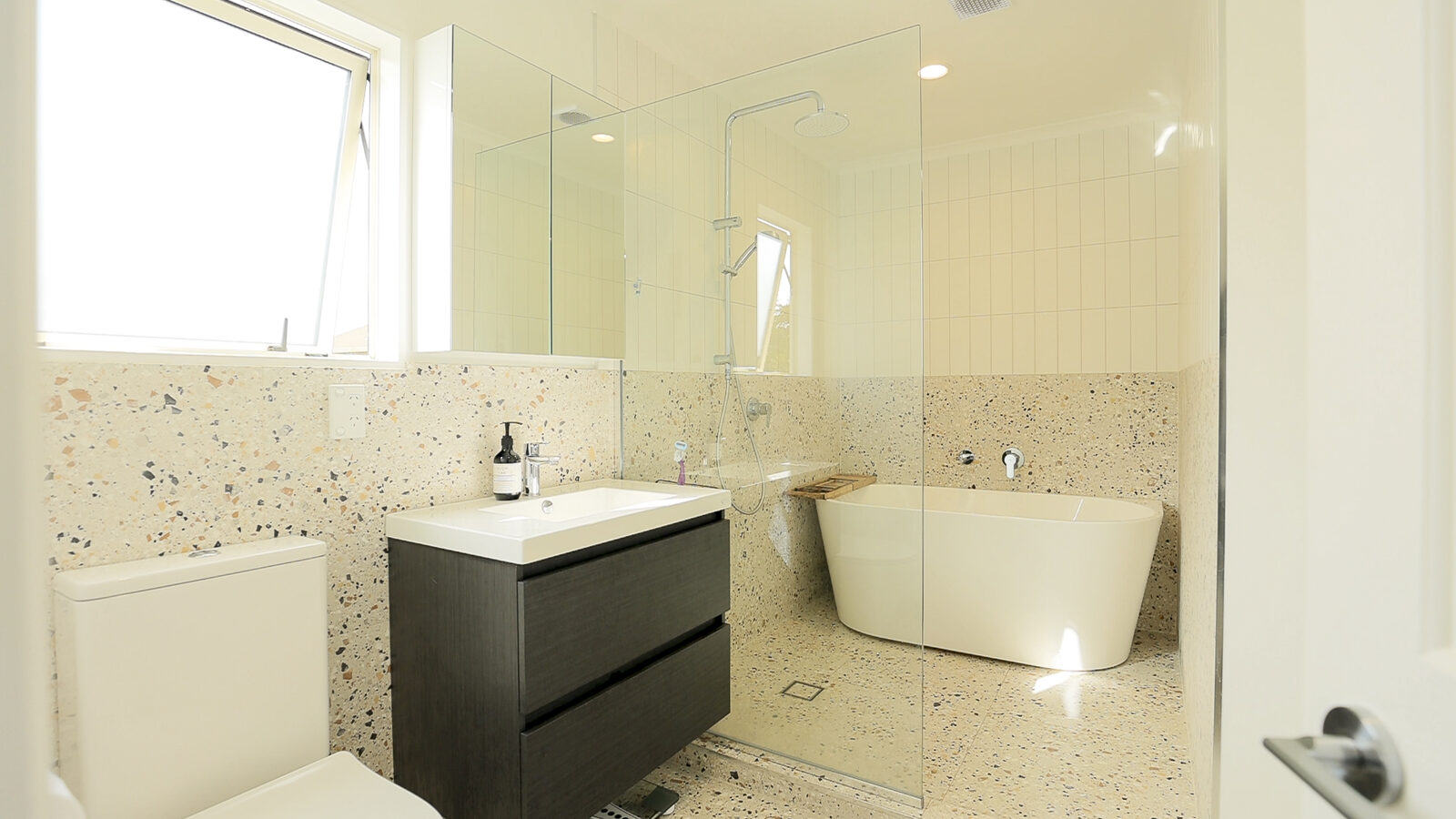
We use both: Traffic 200 vinyl in our Upgrade package, and a tiled floor in the Tile-Look and Full Tile.
Vinyl vs tiles at a glance
| Vinyl | Tiles | |
|---|---|---|
| Feel underfoot | Warmer and softer | Cold without heating |
| Look | Plain, timber or stone patterns | Any tile, any size |
| Time to lay | Quick, no curing | Slower: adhesive, grout, drying |
| Joints | Few or none | Grout lines |
| Damage | Can be cut or dented | Can crack if the floor moves |
| Walk-in shower floor | Not suitable | Yes |
| Underfloor heating | Possible with the right product | Works very well |
| Our package | The Upgrade | The Tile-Look and Full Tile |
Why vinyl works well in bathrooms
Sheet vinyl is laid in one piece or with very few welded joints, so there's almost nowhere for water to get through. Taken up the wall a little at the edges and sealed, it makes a simple, wipe-clean floor.
It's also comfortable: on a winter morning in a weatherboard bungalow, vinyl is noticeably warmer underfoot than tile.
The trade-offs are durability and look. A sharp edge dragged across it can cut it, heavy point loads can dent it, and it doesn't have the depth of a real tile. It's an excellent floor for a shower tray or acrylic shower bathroom, a rental, or a second bathroom. It isn't the floor for a level-entry tiled shower.
Why tiles are the premium choice
A well-laid tiled floor will outlast most of what sits on it. Tiles don't dent and they suit underfloor heating better than anything else. They also let the floor and walls work together, whether that's matching tiles or a tiled floor under tile-look wall panels.
Tiles are also the only option if you want a walk-in shower where the floor falls to a drain with no tray. That's a tiled wet area, and in Auckland it needs building consent. See why a tiled shower needs consent.
The downsides: tile is cold without heating, it takes longer to lay, and the grout lines need some care. Choose a matt or textured tile with a good slip rating; we explain how in how to choose bathroom tiles.
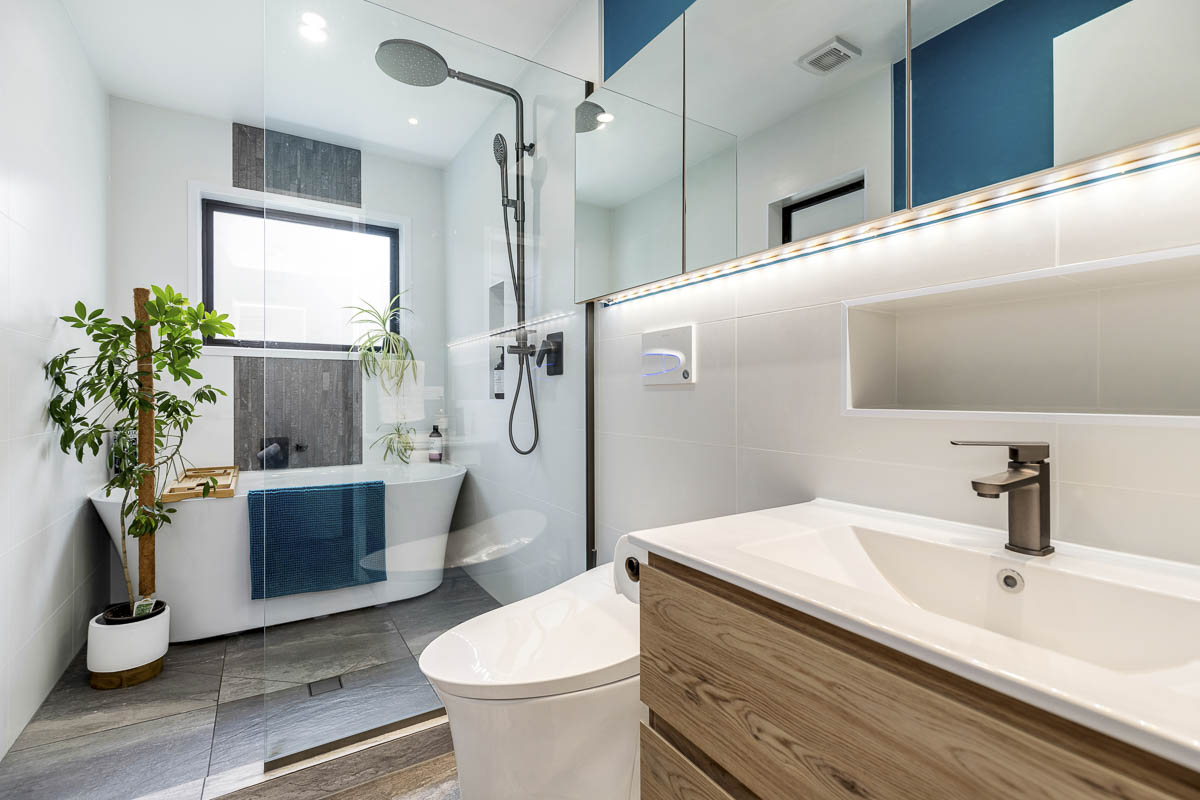
What each floor needs underneath
Under vinyl
Vinyl shows every bump and gap beneath it. Old timber floors usually need a new smooth sheet underlay fixed down first, so nail heads and board edges don't print through. If the old floor has rot or soft spots around the toilet or shower, that gets fixed before anything goes down.
Under tiles
Tiles need a stiff, stable base. If the floor flexes, grout cracks and tiles can crack or come loose. On a timber-framed floor that usually means checking the joists, adding a suitable tile underlay and, in wet areas, waterproofing before tiling. A floor that has sagged in an older villa or state house may need packing or levelling first. Our hidden costs guide explains how we find this at the pre-start check rather than halfway through.
Slip resistance
Both options can be safe on a wet floor if you choose well.
- Vinyl made for bathrooms usually has a textured surface that grips reasonably well when wet.
- Tiles vary hugely. A polished or glossy tile can be slippery when wet; a matt or textured tile with a suitable slip rating is much better. Always ask for the slip rating before you buy floor tiles.
If you're planning for older family members, read accessible bathrooms for ageing in place.
Fixed price · fixed finish date
Indicative starting prices. Your fixed price is confirmed after a short site check.
Not sure which one? Plan it free in 3D or get an instant estimate.
Which should you choose?
Choose vinyl if you're keeping a shower tray or acrylic shower, you want the room back quickly, it's a rental, or comfort and budget matter more than a premium look. Our rental bathroom guide explains why it's a popular choice with landlords.
Choose tiles if you want a walk-in shower, underfloor heating, a floor that matches tiled or tile-look walls, or a finish that will look the same in twenty years.
The floor is part of a bigger decision about the walls and shower. Our guide to tiles, wall panels and acrylic puts it all together.
Frequently asked questions
Is vinyl or tile better for a bathroom floor?
Neither is better everywhere. Vinyl is warmer, quicker and more budget-friendly; tile is more durable, more premium and the only choice for a walk-in shower with no tray. Choose based on the shower you want and how long you plan to stay.
Is vinyl flooring waterproof in a bathroom?
Sheet vinyl is very water-resistant, with few or no joints, and the edges are sealed. It still relies on a sound floor underneath, so any existing water damage needs fixing before it's laid.
Are tiled bathroom floors slippery?
They can be if the tile is glossy. A matt or textured tile with a suitable slip rating for wet areas is much safer. Ask your supplier for the slip rating before you choose.
Can I put underfloor heating under vinyl?
Some vinyl products and heating systems are designed to work together, but tile is the more common and more forgiving partner for underfloor heating. See heated towel rails, mirrors and underfloor heating for whether it's worth it.