A heated towel rail is one of the bathroom extras that genuinely earns its keep: towels dry properly between uses, the room stays a little drier, and it's pleasant on a cold Auckland morning. A demister mirror is the other one we'd put near the top of the list. LED mirrors, mirror cabinets and underfloor heating are worth it in the right bathroom, but they need planning before the walls and floor are closed up.
Heated towel rails
What they do well
A heated towel rail dries towels between showers, so they don't sit damp in the room. That's good for the towels and for the room: less moisture hanging around means less condensation and less mould. It also warms the towel you step out to on a winter morning.
What it isn't is a room heater. It takes the chill off a small bathroom but won't heat a big one on its own.
Hardwired or plug-in?
- Hardwired rails are connected by an electrician, with no visible cord. They can be put on a timer or switch so they run when you need them.
- Plug-in rails are simpler to add later, but need a suitable outlet in the right place and leave a cord showing.
In a renovation we usually recommend hardwired, with the wiring run while the walls are open.
Where it goes
Your electrician will place the rail outside the zones the wiring rules set around the shower and bath. It needs to be within reach of the shower but not where it gets splashed directly. Make sure the rail is fixed into solid framing, and think about the width: a rail that's too narrow won't dry a family's towels.
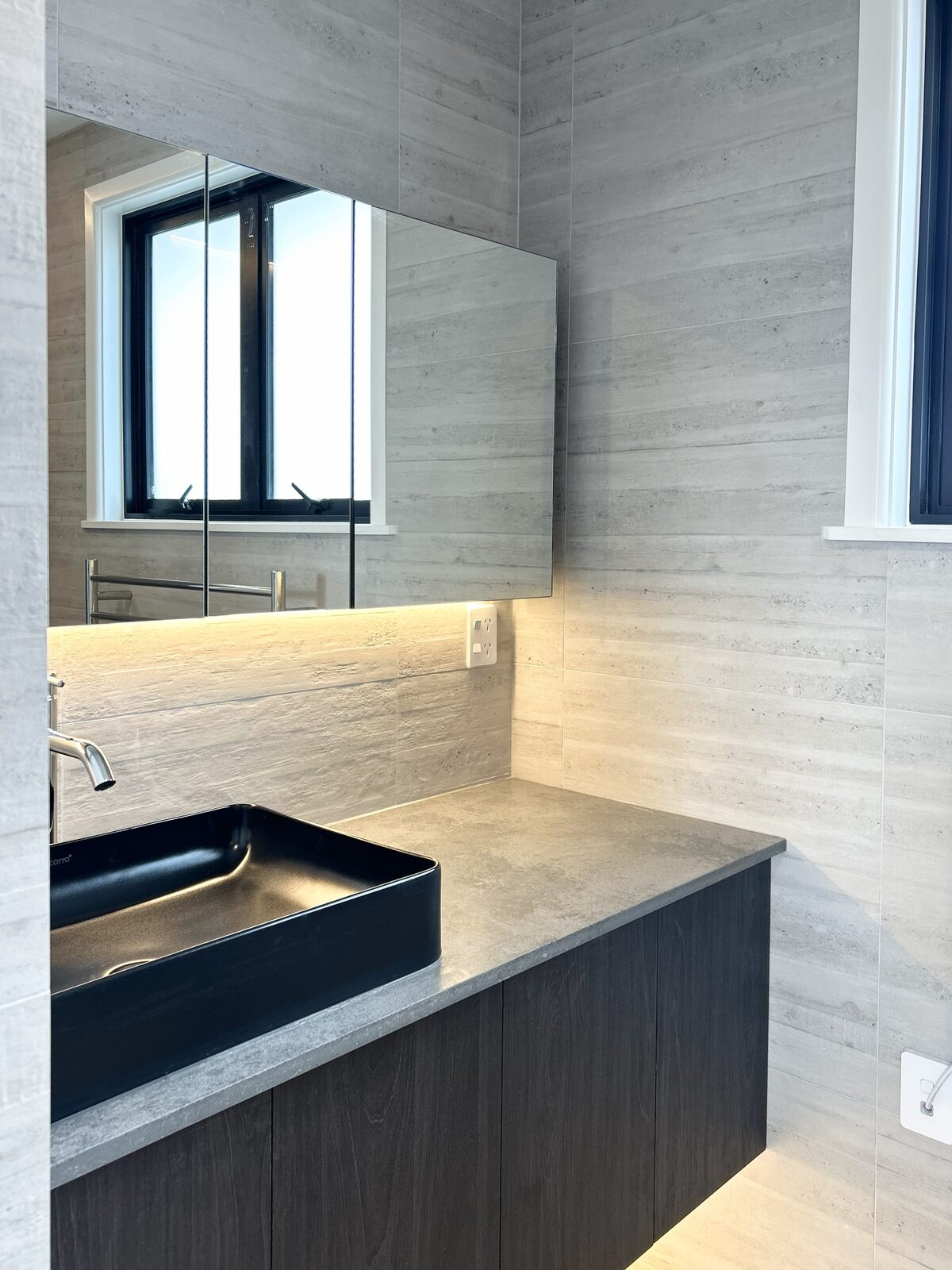
Demister mirrors
A demister is a thin heating pad on the back of the mirror that keeps a patch clear of steam. It's usually wired to come on with the bathroom light or fan, so it just works without anyone thinking about it.
It's a small thing that makes a busy family bathroom much nicer to use. It doesn't replace a good extractor fan; see bathroom ventilation and extractor fans.
LED and backlit mirrors
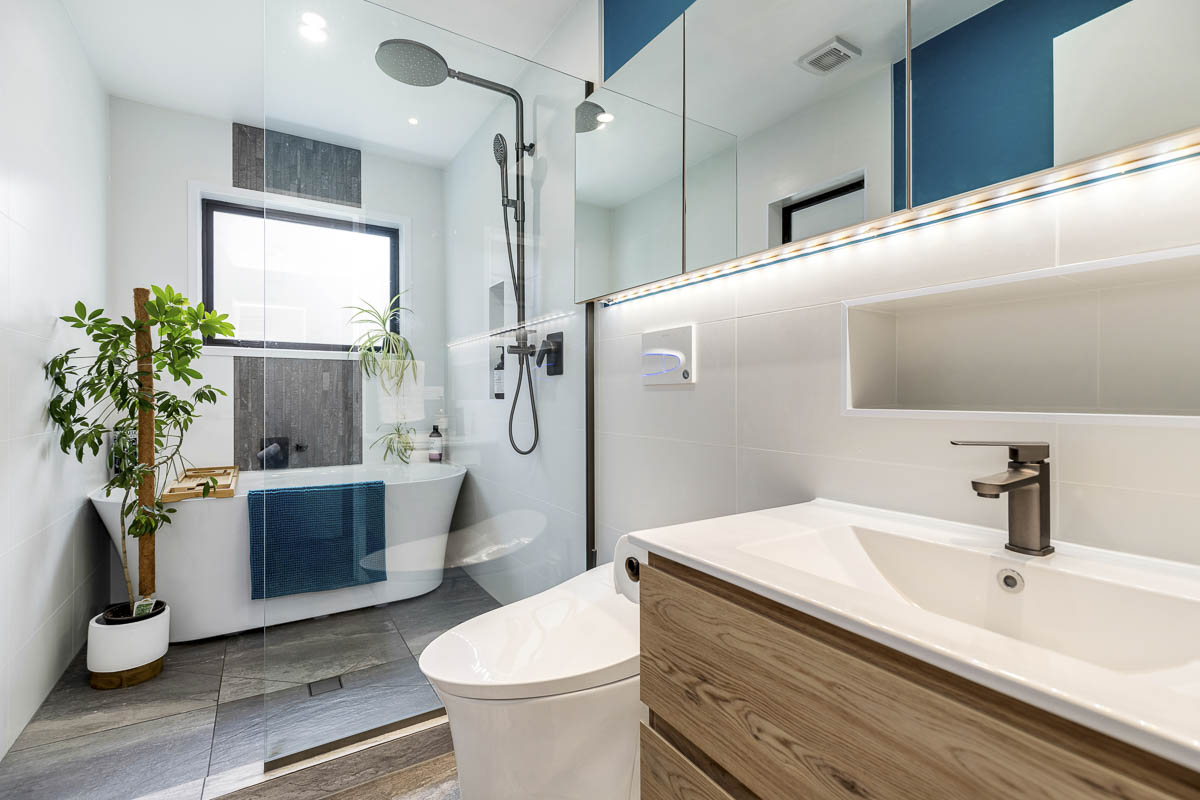
Backlit mirrors give soft, even light at face height, which is better for grooming than a single ceiling light that casts shadows. Many include a demister. They need wiring at the right height behind the mirror, so decide on the mirror size before the wall is lined. Our guide to bathroom lighting ideas covers how to layer mirror lighting with the rest of the room.
Mirror cabinets
If storage is tight, a mirror cabinet is one of the best upgrades for the space it takes. A recessed cabinet sits back into the wall cavity so it doesn't stick out, but that needs framing done before lining. Some cabinets include lighting, a demister and a power point inside for a toothbrush or shaver. See bathroom storage ideas.
Underfloor heating
Underfloor heating is lovely on a tiled floor. The tiles hold the warmth and the floor dries faster after showers. It's the extra people most often wish they'd added, and the hardest to add later, because it goes under the tiles.
- It suits tiled floors best. Some vinyl and heating systems are designed to work together, but tile is the more common partner; see vinyl or tiles for your bathroom floor.
- It needs its own thermostat and a timer, so it runs when you'll use the room.
- It's decided at the planning stage, before the floor is laid.
Fixed price · fixed finish date
Indicative starting prices. Your fixed price is confirmed after a short site check.
Not sure which one? Plan it free in 3D or get an instant estimate.
Plan the wiring before the walls close
All of these extras rely on wiring in the right place, so the time to decide is before the walls are lined. Adding a hardwired towel rail or a backlit mirror after the room is finished usually means cutting into new walls.
Our Tile-Look and Full Tile packages open the walls, which makes this straightforward. In a one-week Refresh, where the walls stay as they are, a plug-in rail or a mirror that uses existing wiring may be the practical option. We'll tell you at the site check what your room can take.
Match the finish of the towel rail to your tapware, too; a slightly different shade of brass or black stands out. See picking a tapware finish, and for the vanity under the mirror, wall-hung or floor-standing vanity.
For how these extras fit with your walls and floor, read our guide to tiles, wall panels or acrylic.
Frequently asked questions
Is a heated towel rail worth it in a bathroom?
For most people, yes. It dries towels between uses, reduces damp in the room and takes the chill off. On a timer, it runs only when you need it.
Does a heated towel rail heat the bathroom?
A little. It takes the chill off a small bathroom but isn't designed to heat the room. If you need more warmth, consider underfloor heating or a ceiling heater.
How does a demister mirror work?
A thin heating pad behind the mirror keeps it clear of steam. It's usually wired to the light or fan switch, so it comes on automatically when you use the bathroom.
Can I add underfloor heating to an existing bathroom?
Only by lifting the floor, because the heating goes under the tiles. That's why it's best decided at the start of a renovation, alongside the choice of floor.