Choosing bathroom tiles is easier if you decide in this order: where the tile is going (wall, floor or shower floor), then size, then finish and slip resistance, and only then colour. Most tile regrets come from picking the colour first and finding out later that the tile is too slippery, too small for the wall, or the wrong size for the shower floor falls.
Start with where the tile goes
A wall tile and a floor tile do different jobs.
- Walls don't get walked on, so almost any tile works, including gloss. Large tiles mean fewer grout lines to clean.
- Main floor needs a tile made for floors, with enough grip to be safe when wet.
- Shower floor is the hardest job. It has to follow the falls to the drain and be safe for wet bare feet.
Check the tile is rated for where you want it. Some wall tiles aren't strong enough for floors.
Tile size: large format or small?
Large format
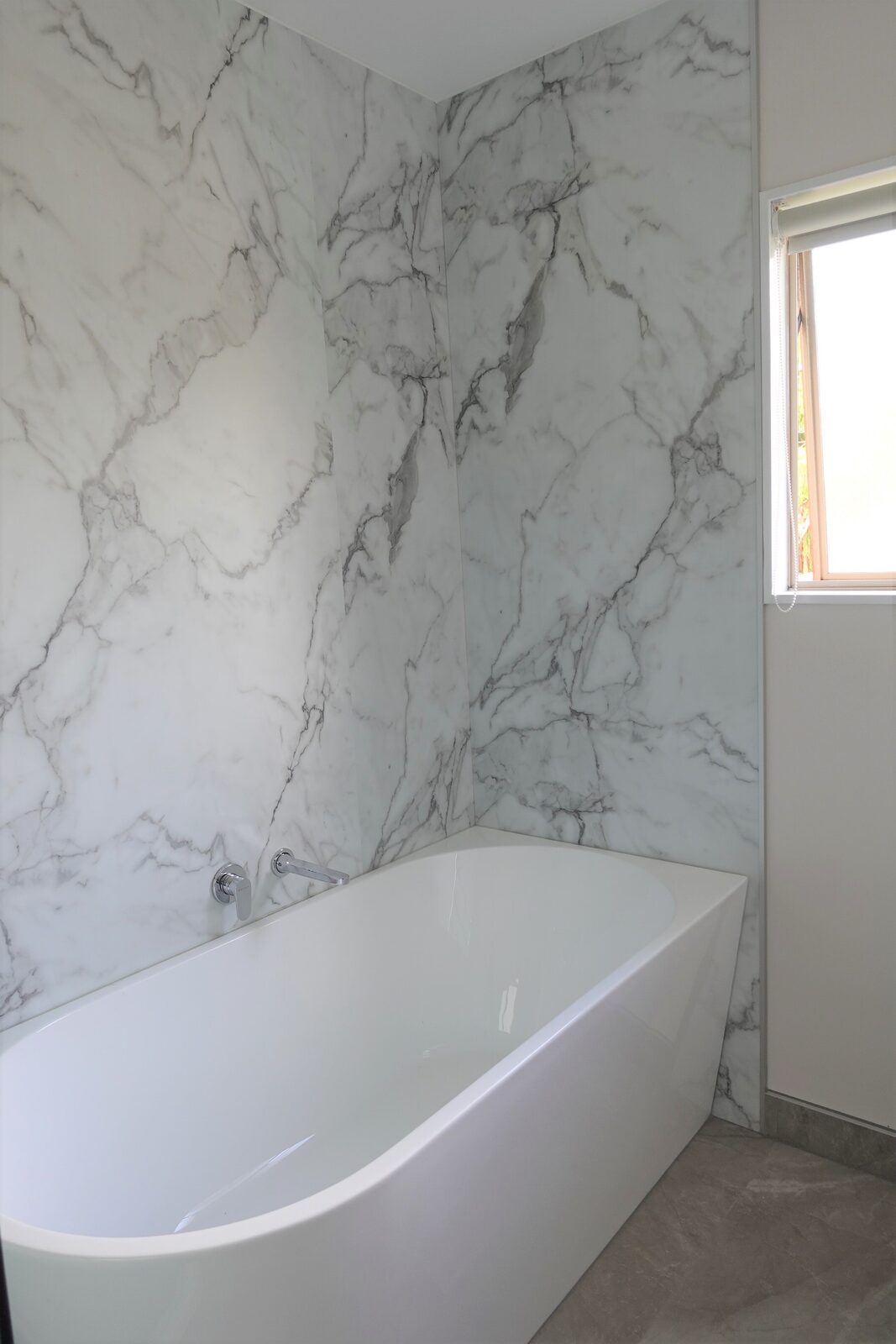
Large tiles look calm and modern, make a small room look bigger and cut down on grout. They're our usual choice for walls. The catch is that big tiles show every bump in the wall or floor behind them, so the substrate has to be very flat. In an older villa or bungalow, that often means straightening the walls first. See renovating a villa bathroom.
Small tiles and mosaics
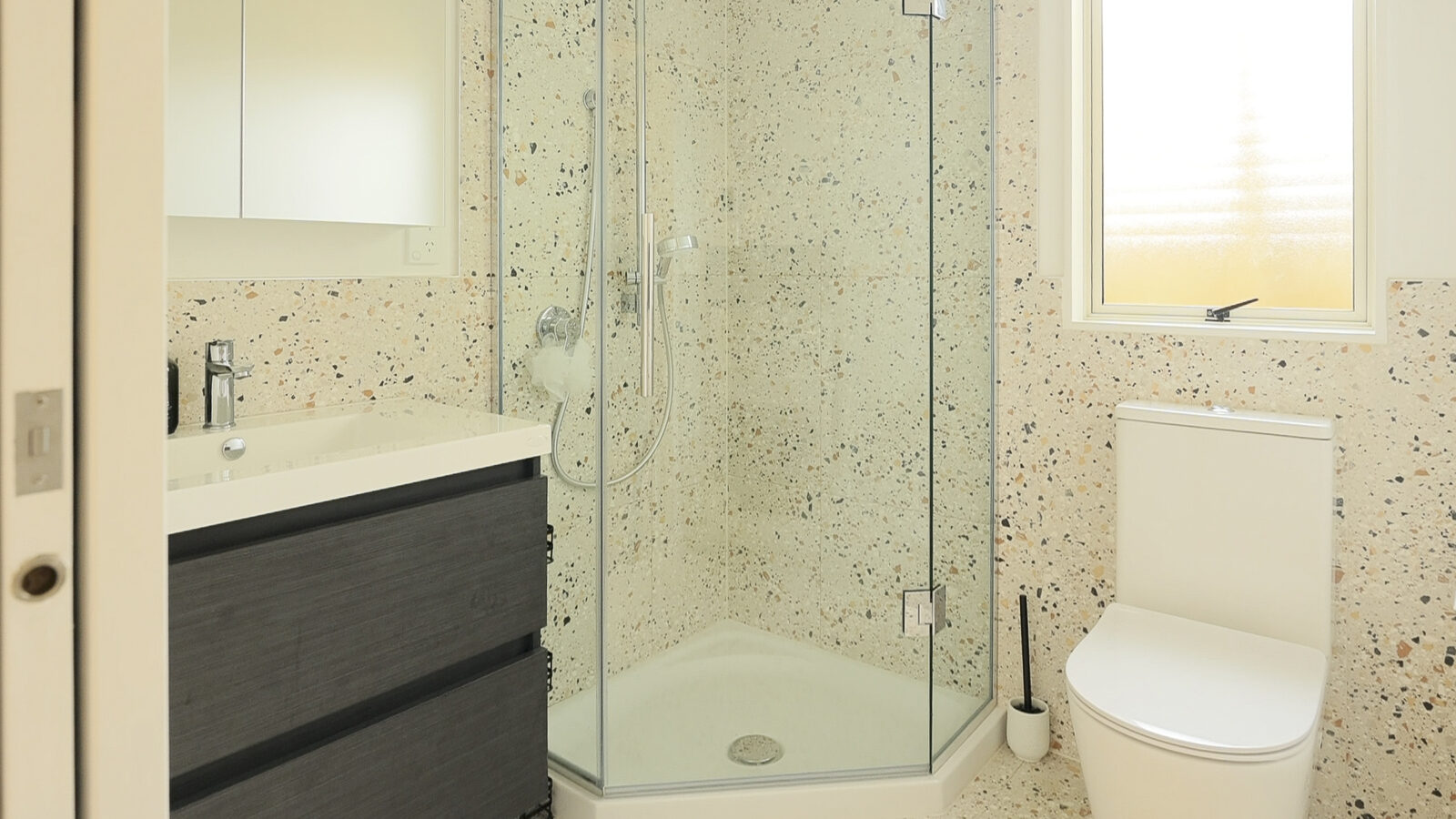
On a shower floor that falls towards a centre waste, small tiles follow the slope better than big ones, and the extra grout lines give more grip. With a linear drain along one edge, the floor falls in one direction, so larger tiles can work. Small tiles also suit feature walls and niches.
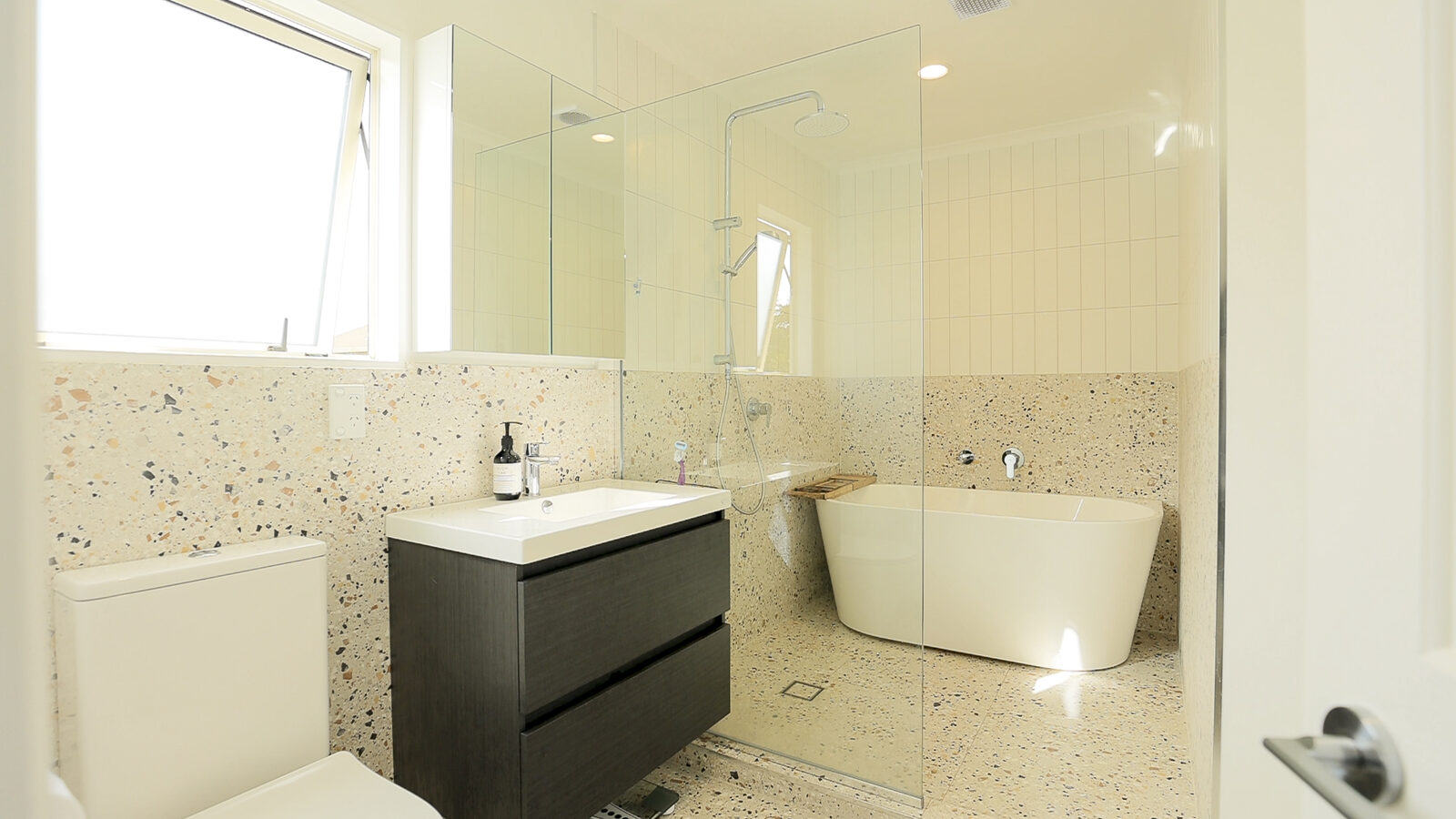
Matt or gloss?
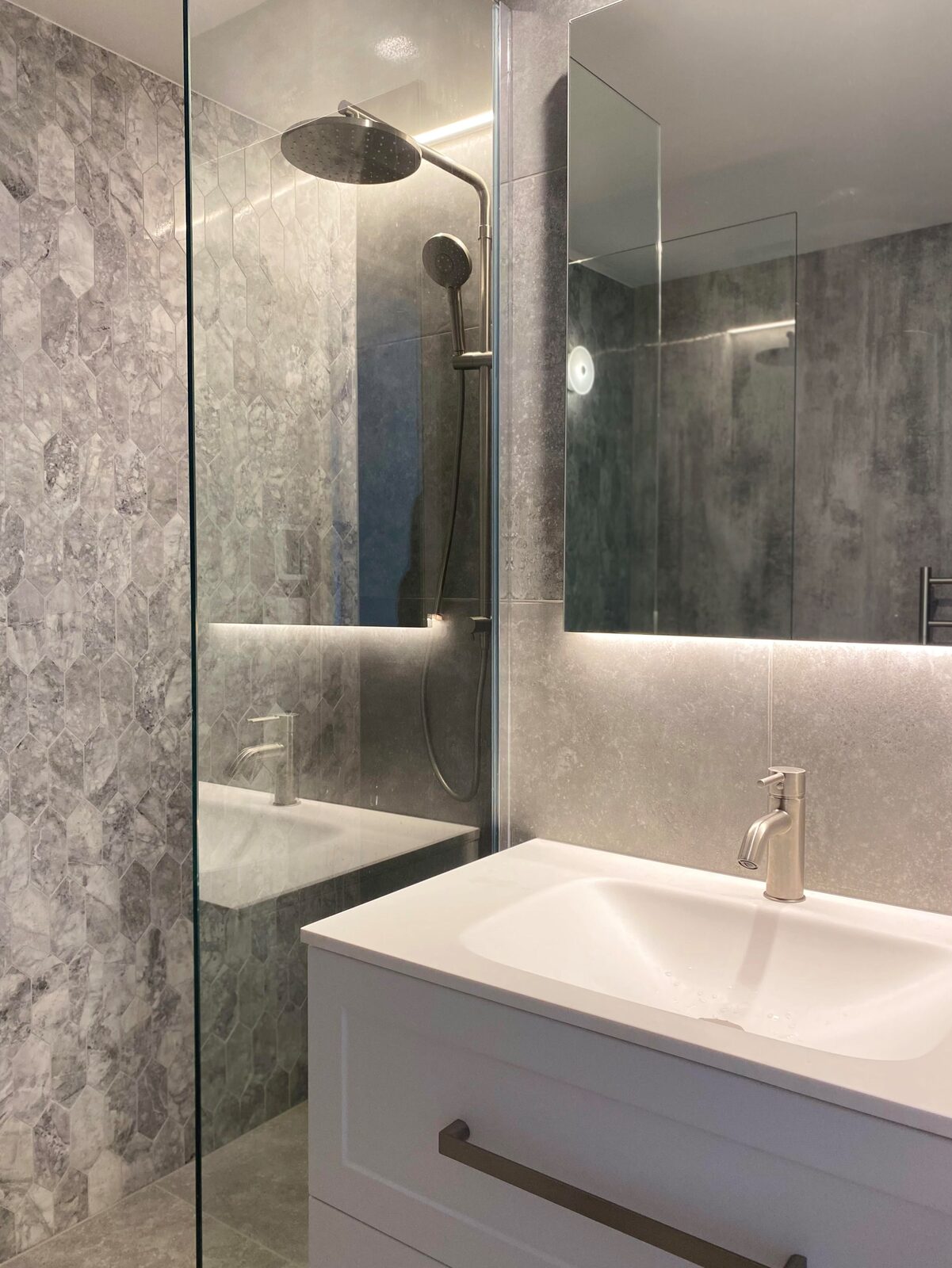
Gloss tiles bounce light around and wipe easily, so they suit walls. On floors they can be slippery when wet.
Matt and textured tiles hide water spots and footprints and give better grip, which is why they're the standard choice for bathroom floors. Very rough textures can hold soap scum, so think about cleaning too.
Slip resistance: ask for the rating
This is the most important thing on a wet floor and the easiest to get wrong. Tiles are tested for slip resistance and given a rating, and the rating you need depends on where the tile goes. A shower floor walked on with wet bare feet needs more grip than a dry floor near the door.
- Ask the supplier for the slip rating of any floor tile and what areas it's suited to.
- Choose a slip-resistant tile for the shower floor and any floor that regularly gets wet.
- Don't judge it by touching a dry sample in a showroom. A tile that feels fine dry can be slippery wet.
If the bathroom is for older family members or young children, lean towards more grip, not less. Our accessible bathroom guide covers safer floors in more detail.
Grout colour and joints
Grout colour changes the whole look. Matching grout makes tiles read as one surface; contrasting grout makes a pattern of the grid. Mid-greys hide everyday marks better than bright white on floors.
Rectified tiles, which are cut to precise edges, can be laid with narrow joints. Grout still needs care, and in a damp room it's where mould starts. Read mould in the grout for how to keep it clean.
Fixed price · fixed finish date
Indicative starting prices. Your fixed price is confirmed after a short site check.
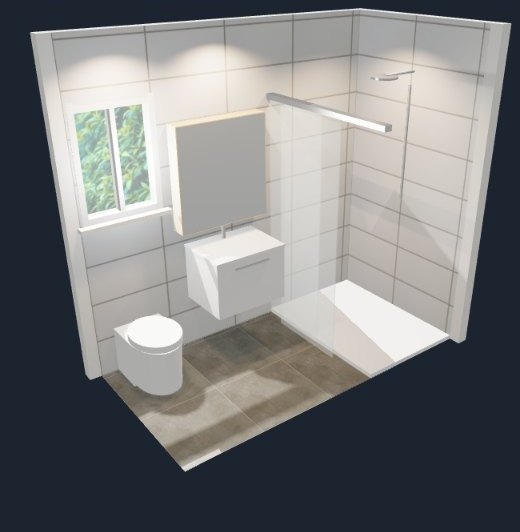
Not sure which one? Plan it free in 3D or get an instant estimate.
How many tiles to order
Your tiler measures the areas, then adds extra for cuts, breakages and spares. A straight lay needs the least waste; herringbone, diagonal and large tiles in small rooms need more. Ask your tiler what allowance they've used for your layout.
Two things people forget:
- Keep tiles from the same batch. Colour and size can vary slightly between production runs, so buy all the tiles at once and check the batch numbers match.
- Keep a few spares. If a tile cracks in five years, you won't find an exact match in the shop.
Tile or panels?
If you love the tiled look but not the time, grout and consent that come with a tiled shower, tile-look wall panels may suit you better. Compare them in our honest review of tile-look wall panels and the bigger guide to tiles, wall panels or acrylic. Remember too that a tiled wet-area shower needs building consent in Auckland; see why a tiled shower needs consent.
Frequently asked questions
What size tiles are best for a small bathroom?
Large-format tiles on the walls usually make a small bathroom feel bigger because there are fewer grout lines. On a shower floor that falls to a centre waste, smaller tiles follow the slope better. See more small bathroom ideas.
What is the best tile for a shower floor?
A tile rated for floors, with a slip-resistant matt or textured surface suitable for wet bare feet. Ask the supplier for the slip rating and what areas it suits. Small tiles or mosaics work well with a centre waste.
Should bathroom floor tiles be matt or gloss?
Matt or textured. Gloss floor tiles can be slippery when wet and show water marks. Keep gloss for the walls.
How many extra tiles should I order?
Enough for cuts, breakages and a few spares, and more for herringbone or diagonal layouts. Your tiler will work out the allowance from the measured areas. Buy them all from the same batch.