Wall hung vanity vs floor standing comes down to space versus storage. A wall-hung vanity shows more floor, so a small bathroom feels bigger and is easier to clean underneath. A floor-standing vanity gives you more cupboard space, hides old pipework and uneven floors, and is simpler to fit without opening the wall.
Both are good choices. The right one depends on the size of the room, the wall behind it and how much you need to store.
The quick comparison
| Wall-hung | Floor-standing | |
|---|---|---|
| Feel of the room | Lighter, more open | Solid, built-in |
| Cleaning | Mop straight underneath | Clean around the base |
| Storage | Less, usually drawers | More, cupboards to the floor |
| What the wall needs | Solid framing behind the lining | Less, the floor takes the weight |
| Plumbing | Neater pipework in the wall | Can hide existing pipes |
| Height | Set to suit you | Fixed by the cabinet |
Why people choose wall-hung
It makes a small room feel bigger
When you can see the floor running under the vanity, the room reads as larger. In a compact ensuite or a narrow bathroom in a townhouse, that matters. It's one of the most reliable tricks in our small bathroom ideas.
Cleaning is easier
There's no plinth or kickboard collecting dust and hair, and no gap behind the base for water to sit in. You mop straight through.
You choose the height
A wall-hung vanity can be set higher for tall people or lower for children. That flexibility is also useful when planning for later life; see accessible bathrooms for ageing in place.
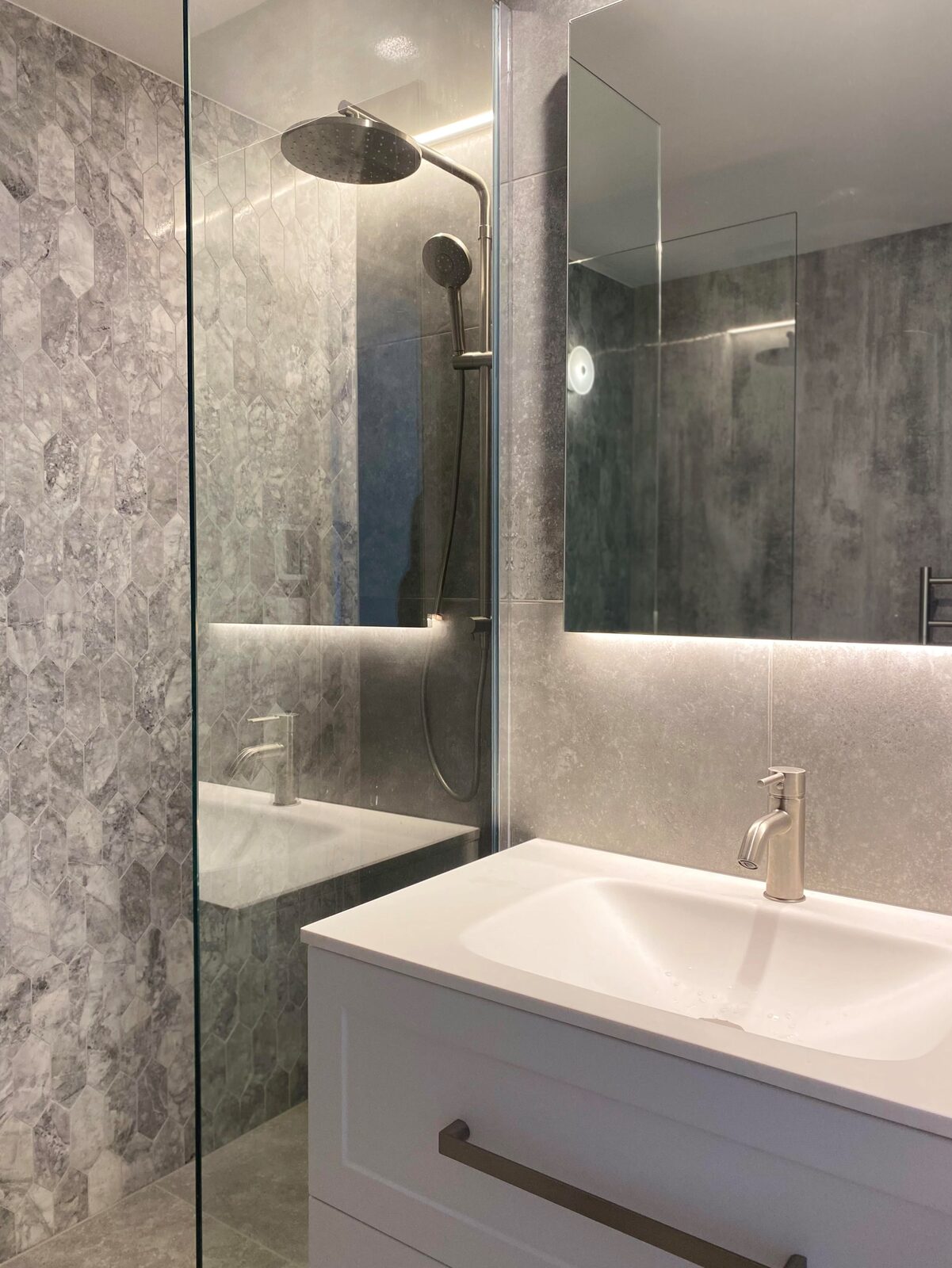
What a wall-hung vanity needs behind it
This is the bit that gets missed. A wall-hung vanity, full of water and with someone leaning on it, puts a lot of load on the wall. It must be fixed into solid timber framing, not just the wall lining.
- Extra framing. We add solid timber between the studs at the right height before the wall is lined.
- Pipework in the wall. The waste and water supply come out of the wall rather than the floor, so they need to be positioned for the vanity you've chosen.
- The right wall. Very old walls, or walls with services in the way, can make it harder. We check this at the site visit.
That's why it's easiest to switch to wall-hung when the walls are open anyway, as they are in our Tile-Look and Full Tile packages. In a quick refresh where the walls stay closed, a floor-standing vanity is often the simpler, sensible choice.
Why people choose floor-standing
More storage
A cabinet that runs to the floor gives you more cupboard space. For a busy family bathroom with one vanity, that can matter more than a floating look. See bathroom storage ideas for ways to get more out of either type.
It hides things
In an older home, a floor-standing vanity covers floor-mounted pipes and uneven floors without opening the wall. In a villa or bungalow with sloping floors, the kickboard can be scribed to hide the gap.
Simpler to install
The floor carries the weight, so there's less work in the wall. That can make it the better choice in a rental or a refresh where speed and cost matter most.
Fixed price · fixed finish date
Indicative starting prices. Your fixed price is confirmed after a short site check.
Not sure which one? Plan it free in 3D or get an instant estimate.
Materials that cope with a damp bathroom
Whichever type you choose, the cabinet has to survive steam and splashes. Look for moisture-resistant board, edges that are fully sealed, and quality drawer runners. Drawers are generally more useful than cupboards in a vanity, because you can see everything without kneeling down.
The top matters too. A one-piece basin and top has fewer joints to clean. A stone or solid-surface top with a separate basin looks more premium but needs good sealing where they meet.
Matching the vanity to the rest of the room
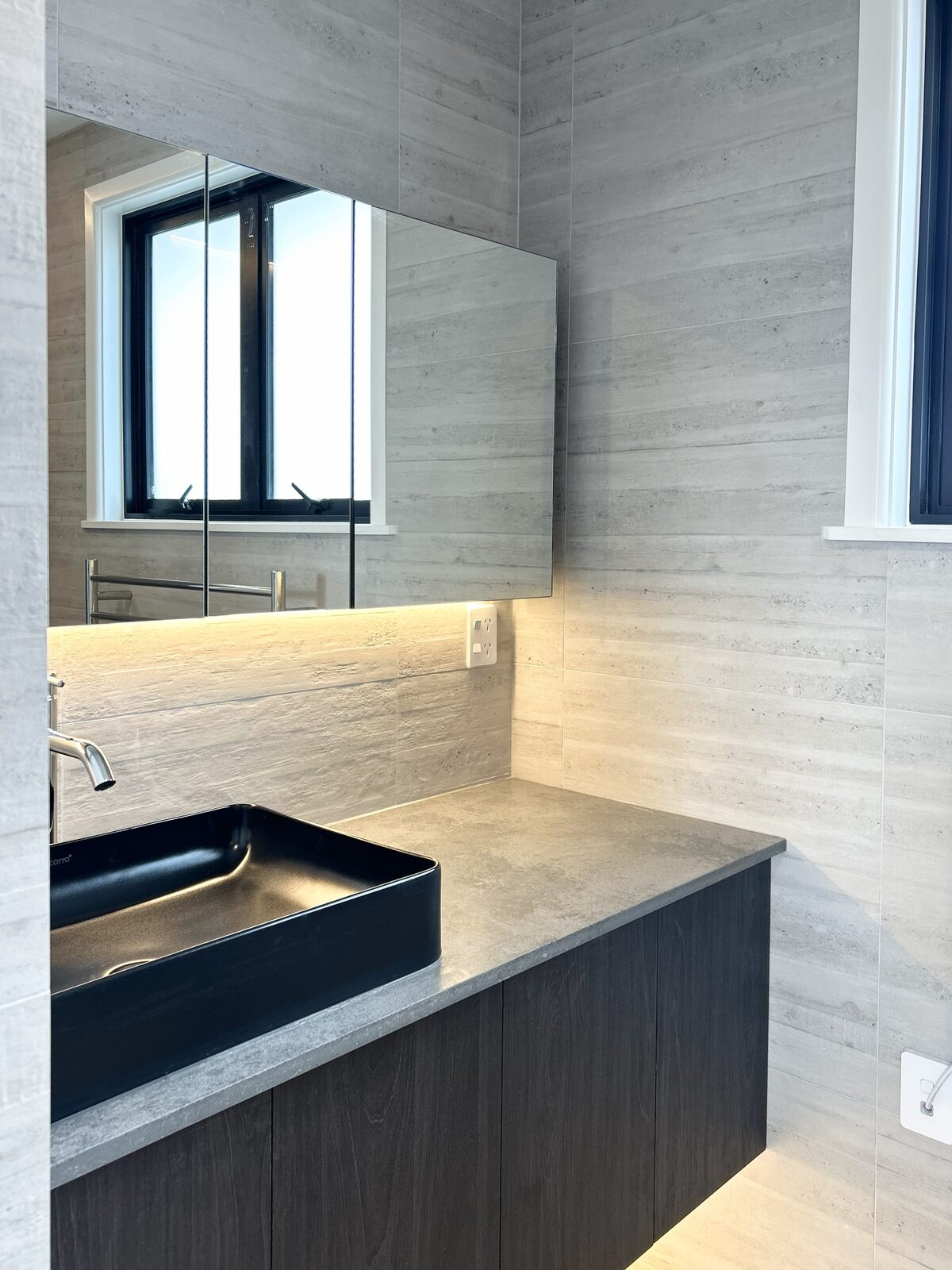
The vanity is the piece of furniture in the room, so it sets the style. A timber-look vanity warms up stone-look panels; a white or black vanity sits well against subway tile. Then pick tapware to suit, and our guide to tapware finishes will help. A backlit or demister mirror above finishes it off; see heated towel rails, LED mirrors and demisters.
For the bigger picture on walls, floors and fittings together, read tiles, wall panels or acrylic.
Frequently asked questions
Is a wall-hung vanity better for a small bathroom?
Usually, yes. Showing the floor underneath makes the room feel bigger and easier to clean. You trade some storage, so choose a model with deep drawers.
Does a wall-hung vanity need extra support?
Yes. It must be fixed into solid timber framing behind the wall lining, added before the wall is lined. The plumbing also needs to come out of the wall at the right height.
Can I swap my floor-standing vanity for a wall-hung one?
Usually, but it often means opening the wall to add framing and move the pipework. It's easiest during a renovation where the walls are being relined anyway. We'll tell you at the site check whether your wall suits it.
Which vanity has more storage?
Floor-standing, because the cabinet runs to the floor. A wall-hung vanity with drawers can still hold a lot, especially paired with a mirror cabinet.